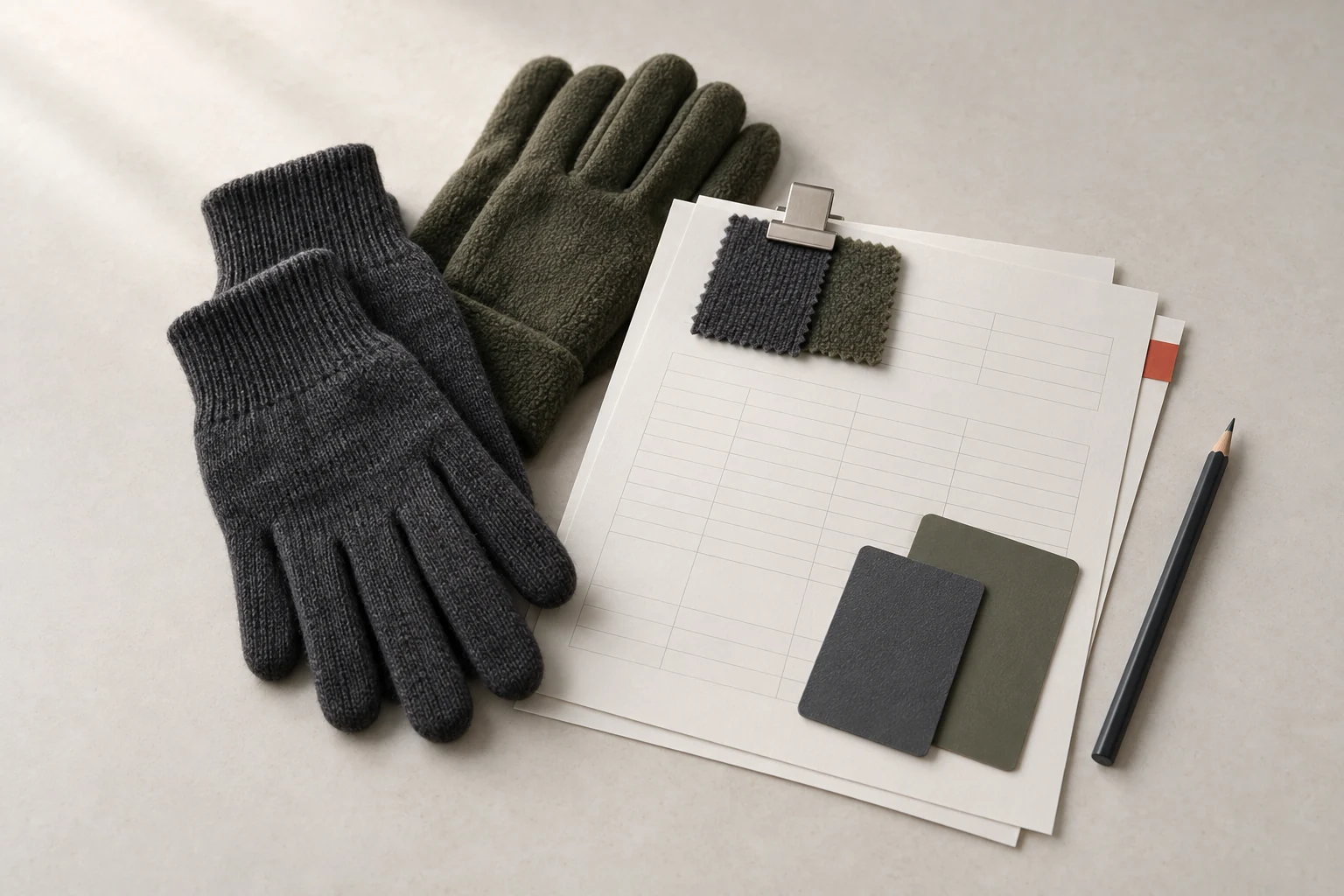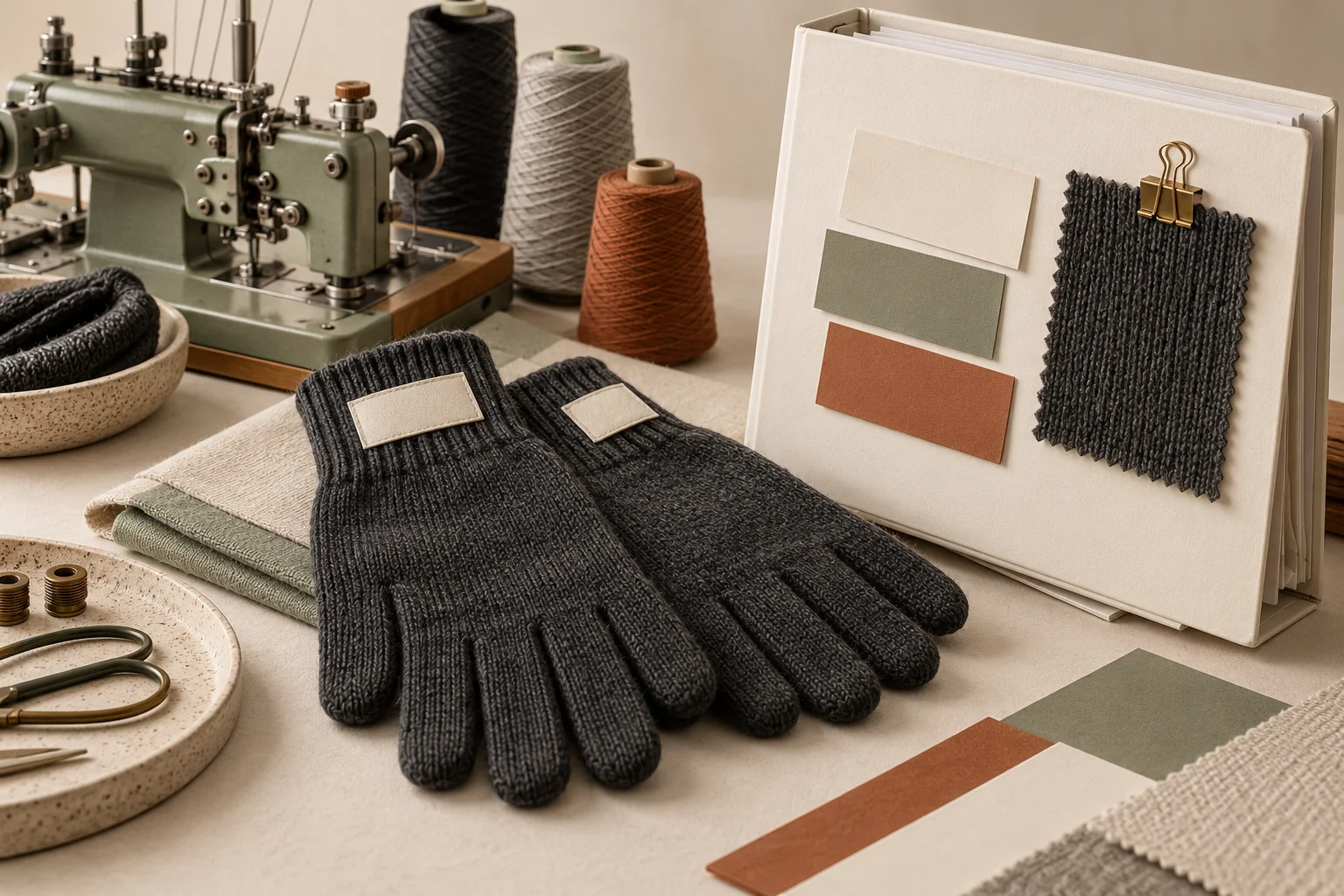
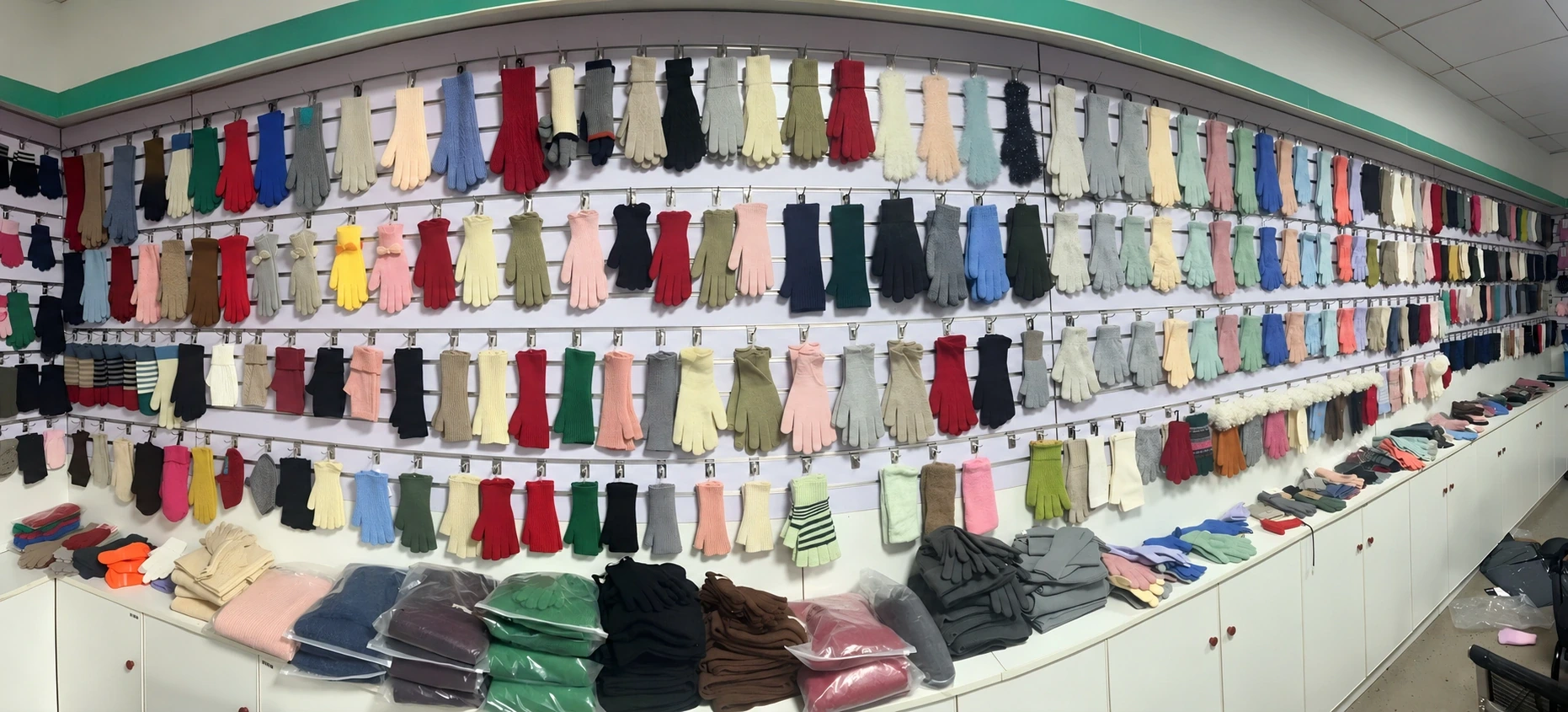
A glove tech pack is the connected specification for the product you want the factory to develop: views, materials, measurements, construction, artwork, assortment and packing. For a private label range, give each style a controlled version and mark undecided items rather than letting a logo mockup stand in for the whole brief.
Define the collection before choosing the logo method
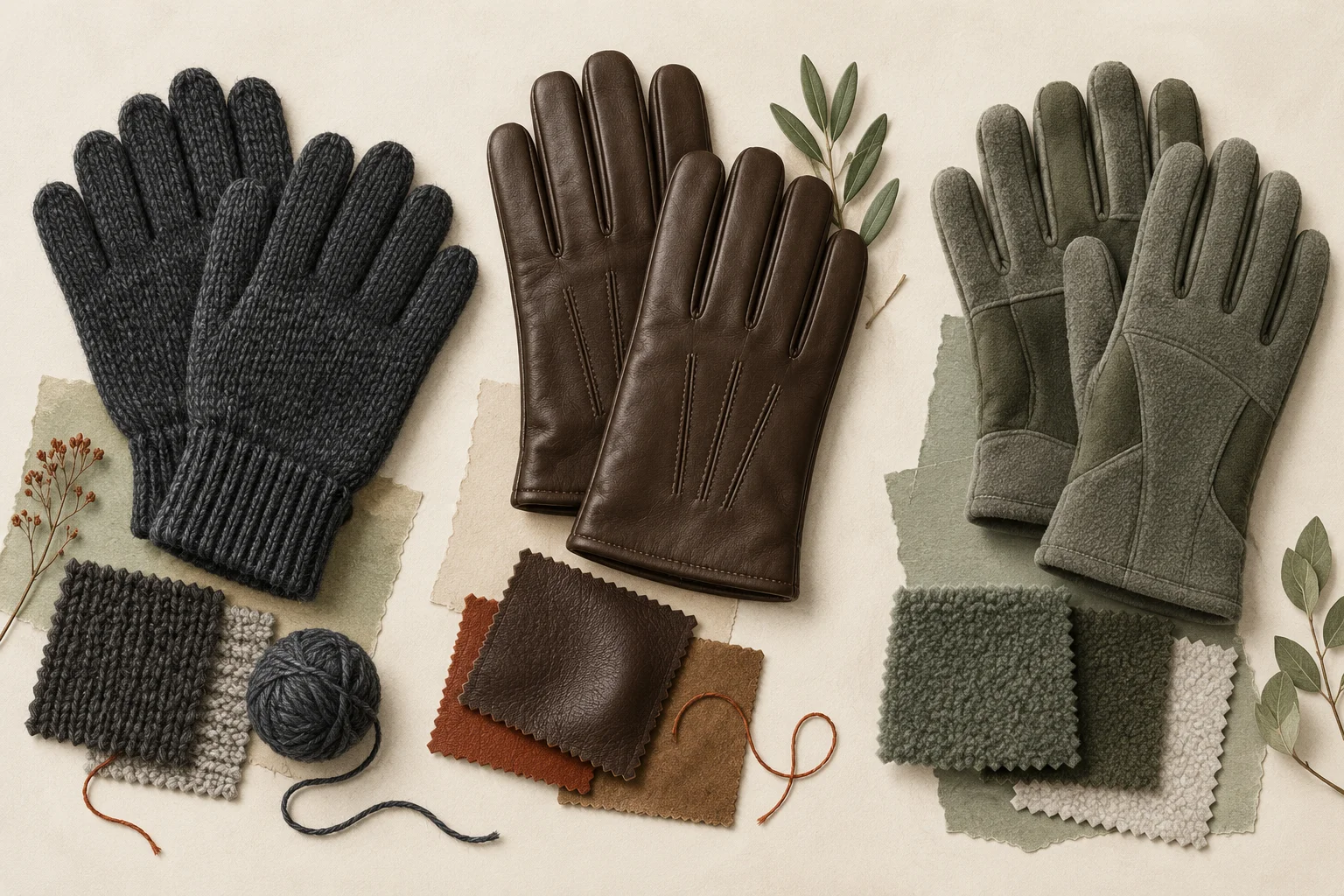
Describe the glove category, destination market, intended brand position and assortment. Identify the elements that must be consistent across the range, such as a color reference, label system or packaging format. A knit glove and a leather glove may need different ways to express the same brand detail. Start with the collection brief, then evaluate material and branding choices on the actual constructions proposed for development.
Agree the OEM or ODM development scope
OEM supports manufacturing from your design, specification or reference sample. ODM supports development from a collection brief. For either route, document what your team supplies, what needs development and who approves each decision. Request clarity on sample rounds, artwork preparation and commercial terms at the quotation stage. The words OEM and ODM help describe the starting point, but the written project scope determines what work is included.
You can begin with a reference sample and an incomplete brief. The purpose of the tech pack is to make fixed requirements and development decisions distinguishable. Use the fields below to build that file, then connect it to the physical sample.
| File section | Information to include | Decision it supports |
|---|---|---|
| Views and construction | Back, palm, thumb and cuff views; label the parts that stay and those that change. | The factory can distinguish a surface detail from a changed panel or knit structure. |
| Component material list | Separate body, palm, lining, cuff, contact material and trims; attach available references. | Each quotation and sample refers to the same material combination. |
| Measurements and artwork | Point codes, units, methods and size targets; logo size, location, orientation and file version. | Fit and brand placement can be reviewed on the same construction. |
| Assortment and packing | Style/color/size quantities in pairs, label wording and the packing version for each group. | The approved product can be connected to the intended order quantities. |
- 01
Use part names that fit the actual glove
A cable-knit brief needs to distinguish the patterned back from the plain palm and rib cuff. A mixed-panel touchscreen glove needs a separate entry for the textile back, palm and contact patches. A generic “main fabric” field loses those differences.
- 02
Track the consequence of each revision
If the cuff fold changes, review the exposed label face and packed presentation. If a lining changes, review the assembled fit. Keep the changed component, affected approvals and next action together instead of sending an updated image with no revision note.
Choose materials using physical references
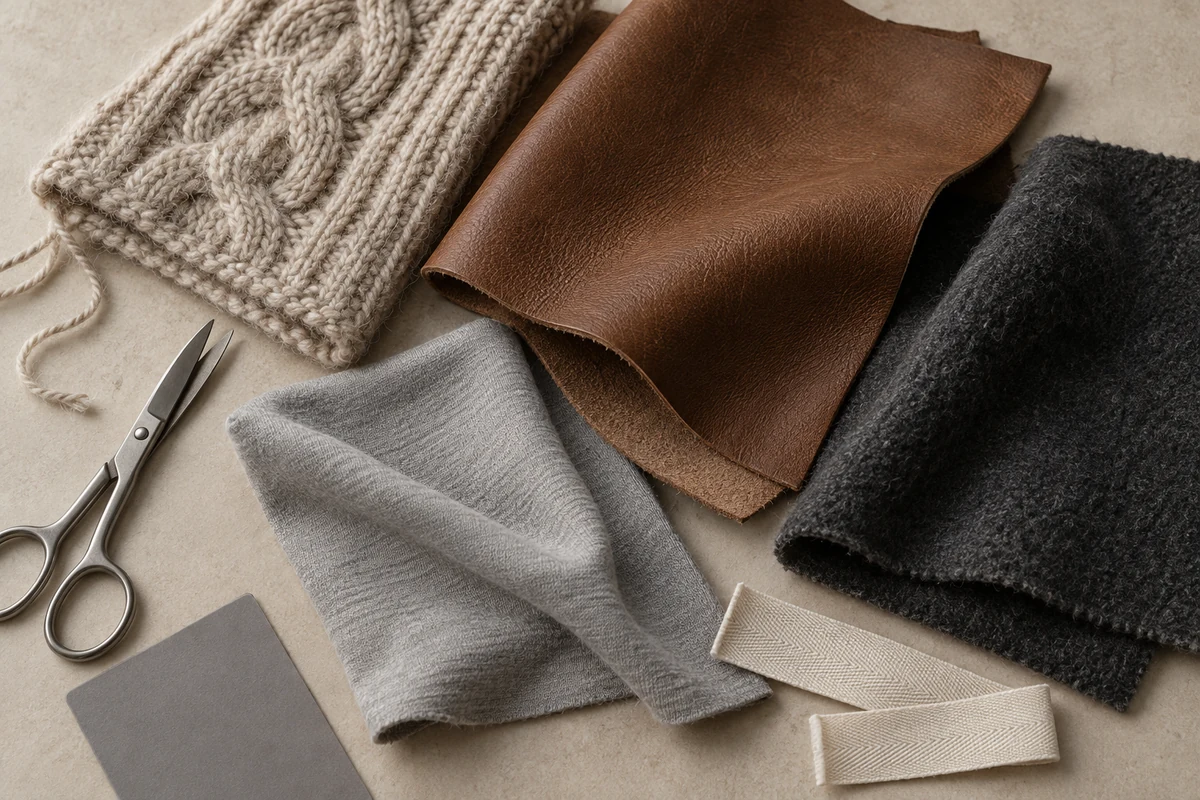
List the desired yarn, fabric, leather, lining and trim requirements, distinguishing mandatory specifications from options to discuss. Compare swatches and complete samples for the agreed hand feel and appearance. A color reference on one substrate should not be treated as automatic approval on another. Record the chosen composition, finish and reference identifiers together, and resolve any material substitution before it becomes part of the final specification.
Prepare artwork that can be sampled
Supply vector artwork where available, the intended mark dimensions, position, orientation and color references. Discuss embroidery, woven labels, embossed details or other proposed applications against the selected material. Review legibility, placement and the reverse-side finish on an applied sample. If the sample requires artwork changes, keep the revised file identifiable and remove older versions from the production handoff. Do not approve a digital mockup as the only reference for the finished application.
Treat labels and packaging as part of the product
Plan material descriptions, size labels, care wording and any destination-specific information with the team responsible for your market requirements. Confirm the packing format and how many pairs each presentation unit contains. Show how packaging versions map to styles and markets so the same glove is not packed with the wrong artwork. Approve the final text and layout before the packing instructions are released.
Build a style, color and size matrix
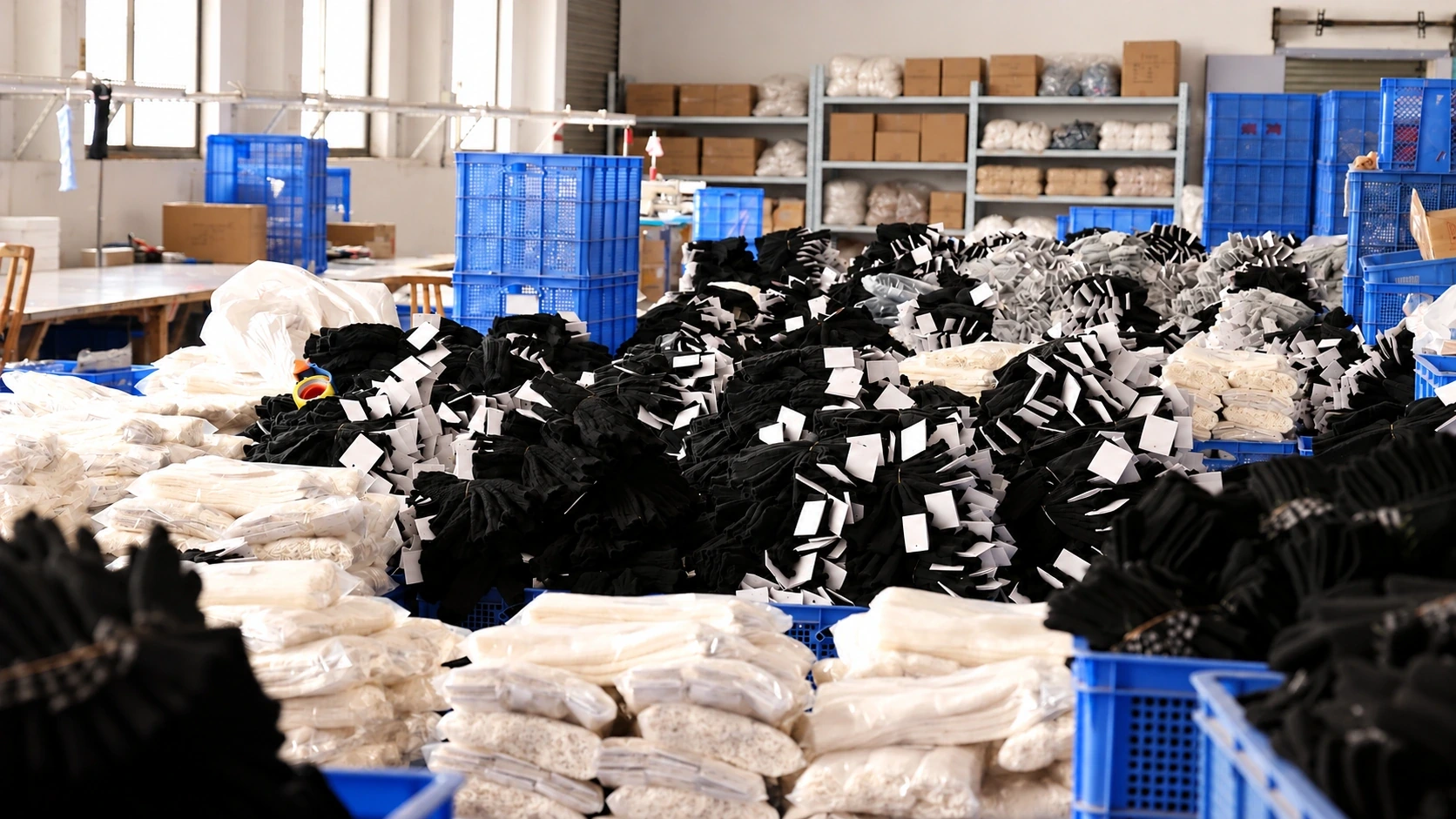
Give each style a stable internal reference and list each color and size as a separate row. Record the quantities in pairs, plus the relevant label and packaging versions. The MOQ is 300 pairs per style per color; confirm the size split in that grouping. This matrix is useful for quotation and order planning, but it also provides a check against sample lists, packing instructions and later changes to the assortment.
300 pairs per style per color. Record the size split and packing format inside each group.
Make changes traceable through approval
Nominate one approval contact and collect revisions in a dated document. State whether each comment is a required change, a question or an optional proposal. When a material, pattern or branding detail changes, assess whether the existing fit or visual approval is still applicable. The final sample, written specification, artwork and assortment should describe the same product before production is scheduled. Sampling and bulk production start dates are confirmed against those approvals.
Retain a practical brand handoff file
Keep the approved material references, size chart, pattern notes, artwork, labels, packaging and assortment together. Add a short change record for future orders so buyers can identify which version is current. For a repeat program, reconfirm availability and commercial terms and call out any new market or packaging requirement. The sourcing brief and assortment template can be used as the index to this file rather than leaving important decisions scattered across email attachments.
Buyer questions.
Can one logo method be used across all glove materials?
Do not assume the same application will give the same result on knit, fleece and leather. Review the proposed method, artwork size and placement on each selected construction. Approve the finished sample before treating the branding detail as part of the production specification.
What files should a brand provide for development?
Provide the tech pack or design reference, available material and color references, size chart, logo artwork with dimensions and placement, label copy, packaging artwork and assortment quantities. Mark missing items as development decisions so responsibilities and quotation scope are clear.
Can the same glove have different packaging for different markets?
Discuss each market and packaging version in the brief. Link the required label artwork, packing format and quantities to the assortment matrix. Feasibility, scope and commercial terms must be agreed for the order before the versions are released for production.
Can the same brand detail be applied to knit, leather and fleece?
A common visual identity can guide the collection, but the application method needs review on each actual material and construction. Approve placement, attachment, legibility and inside finish on the relevant samples.
How do we prevent mixed artwork versions in one order?
Give each approved artwork and label file a version identifier, and link it to the style and destination in the assortment matrix. Record later changes explicitly and confirm the current production and packing instructions.
What belongs in the final private label handoff?
Retain the complete sample, material references, size specification, applied brand approval, label copy, packing configuration and assortment. Keep revisions and outstanding decisions clear before the manufacturing start is confirmed.
Do we need a complete glove tech pack before contacting the factory?
No. Send a reference, approximate style/color quantities, destination and timing. Identify the decisions still open. We can discuss the development scope, then complete the relevant specification before production approval.
Is a glove tech pack the same as a size chart?
No. A size chart is one part of the file. The tech pack also connects the construction, component materials, artwork, assortment and packing to the approved sample and its current revision.
Assortment matrix
Map quantities by style, color and size, with the right labeling and packing versions.
Download the CSV template